
BUY NOW BUTTON
Edition of the Warwick Economics Summit
BIGGER AND BETTER THAN EVER

WES 2026
FEB 6th | 7th | 8th
THANK YOU FOR ATTENDING!
ATTENDING SPEAKERS

CEO of the Financial Times Jon Slade is Chief Executive Officer of the Financial Times Group, appointed in July 2025 after more than 20 years with the FT. He was instrumental in the shift to a digital-first, subscription-led model, previously leading its global commercial and subscriber strategy. Alongside this transformation, he has driven sustainability and social impact initiatives, positioning the FT as both a commercially resilient and socially responsible global news organisation.

CFO of Nestle Anna Manz is Executive Vice President and Chief Financial Officer of Nestlé, a role she assumed in 2024. She previously served as CFO and Board Director at London Stock Exchange Group and as CFO at Johnson Matthey. With a global career spanning Europe, Asia, and the US, she brings deep expertise in financial leadership, corporate transformation, and sustainable growth across complex international organisations.

Global Chief Economist at Citi Research Nathan Sheets is the Global Chief Economist at Citigroup, where he leads analysis and forecasting of the global economy and financial markets. He previously served as U.S. Treasury Under Secretary for International Affairs and Chief Economist at PGIM Fixed Income. Earlier roles include senior positions at the Federal Reserve, the IMF, and Citigroup, shaping policy and market insights on international macroeconomic issues.

Secretary-General of ASEAN Kao Kim Hourn is a senior Cambodian diplomat and academic who served as Minister Delegate to the Prime Minister of Cambodia from 2013 to 2022. He currently serves as Secretary-General of the Association of Southeast Asian Nations (ASEAN), leading the Secretariat and advancing regional cooperation and integration. He is also the Founder and former President of the University of Cambodia.

Former Prime Minister of Norway Erna Solberg is the former Prime Minister of Norway (2013–2021) and leader of the Conservative Party since 2004. She has served as a Member of Parliament since 1989 and currently sits on the Standing Committee on Foreign Affairs and Defence. Internationally, she has co-chaired UN initiatives on the SDGs, sustainable ocean governance, and development resilience.
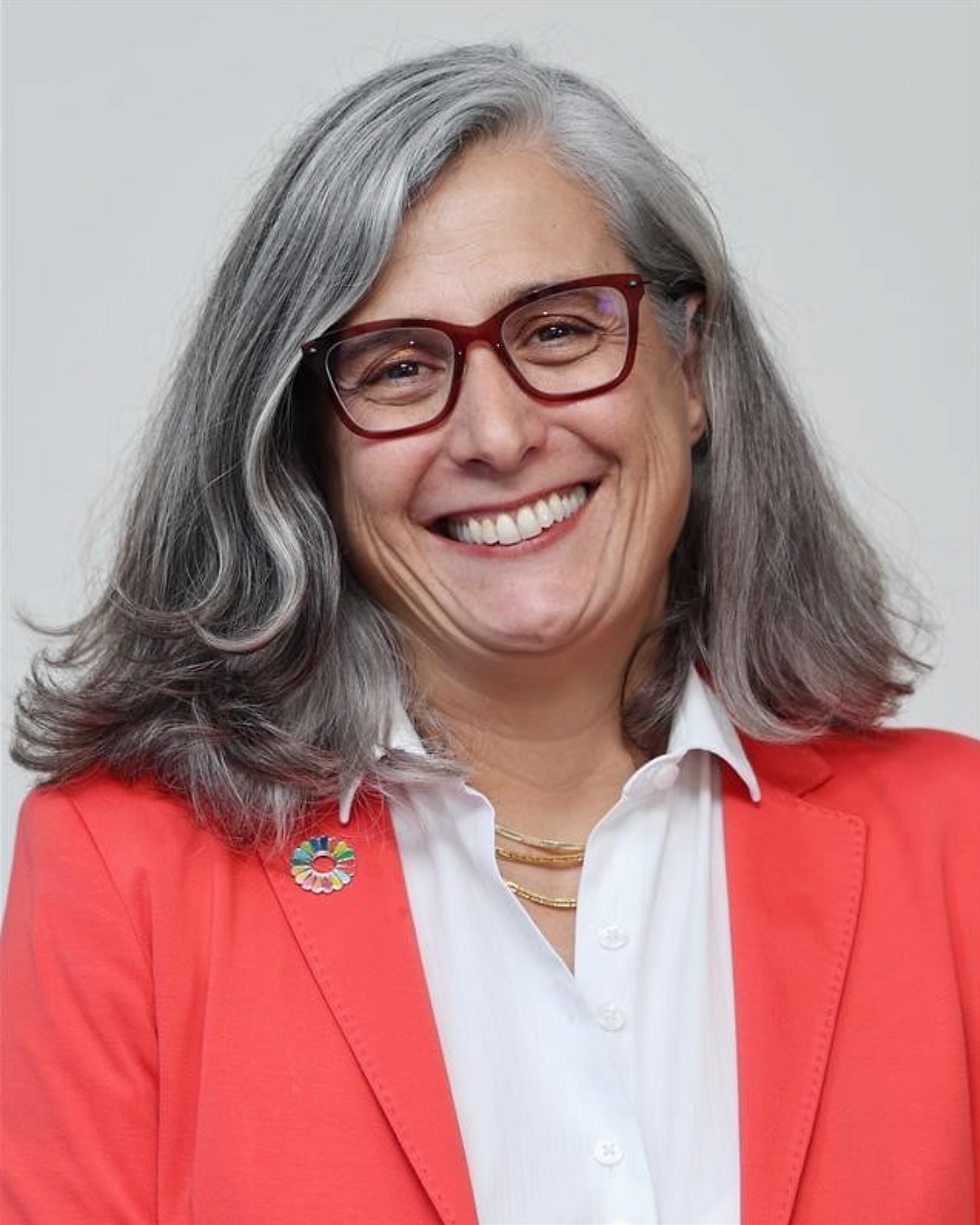
Executive Director of UN - Habitat Anacláudia Rossbach is the Executive Director of UN-Habitat and Under-Secretary General of the UN, appointed in 2024. An economist with over 20 years of experience, she has led global work on housing, informal settlements, and urban policy. Previously, she held senior roles at the Lincoln Institute of Land Policy, Cities Alliance, and the World Bank, overseeing major housing and slum-upgrading programmes in Brazil and beyond.

Former CEO of Reckitt Rakesh Kapoor is the Founder of 12 Flags Group, an investment platform backing early-growth consumer businesses. Previously, he served as Group Chief Executive Officer of Reckitt PLC (2011–2019), where he transformed the company into a global leader in Health & Hygiene, delivering strong shareholder returns and scaling consumer healthcare to over 60% of the portfolio. He also served on the board of NHS England from 2021 to 2023.

Chief Economic Advisor to the Government of India V. Anantha Nageswaran is the Chief Economic Advisor to the Government of India. Prior to his appointment, he worked as an author, academic, and consultant, with extensive experience in global macroeconomic and financial markets research. He has written widely on the Indian and global economy and co-authored books on derivatives and finance, following research roles with international institutions in Switzerland and Singapore.

2022 Nobel Peace Price Laureate Oleksandra Matviichuk is a human rights lawyer and Head of the Center for Civil Liberties, leading efforts to defend human rights and document war crimes in Ukraine and the wider OSCE region. Following Russia’s full-scale invasion, she co-founded the Tribunal for Putin initiative to document international crimes under the Rome Statute. Her work haSs received the Nobel Peace Prize (2022).

2025 Nobel Laureate in Economic Sciences Philippe Aghion is a Professor at the Collège de France, INSEAD, and the London School of Economics, and one of the world’s leading economists in innovation and growth. A pioneer of Schumpeterian Growth Theory, his research on creative destruction has fundamentally shaped modern Economic thinking. In recognition of his work, he was jointly awarded the 2025 Nobel Prize in Economic Sciences.
ATTENDING PANELS

In today’s rapidly evolving global economy, central banks play a pivotal role not only in stabilising markets but in shaping long-term prosperity. Central banks collectively oversee over $40 trillion in assets globally, making them among the most powerful economic institutions in the world. From guiding economies through inflationary pressures and shifting geopolitical dynamics, to pioneering digital currency innovation and sustainable finance, central banks are adapting to new expectations with agility and foresight. This panel brings together governors from diverse economies for an open, comparative dialogue on how central banks navigate shared mandates and challenges, yet are steered by a nation’s unique institutional structures, economic conditions, and political realities. This conversation will provide a real-time insight into how central banking leadership is exercised across different national contexts.

Are we commodifying the climate? This panel explores the fast-evolving frontier where environmental preservation intersects with market mechanisms. From carbon credits to biodiversity valuation, a new wave of financial instruments is reshaping how we measure and monetise nature. But how have these tools evolved and what are their implications? According to the World Bank (2024), the collapse in ecosystem services can potentially lead to a $2.7 trillion annual GDP decline. This risk has even impacted corporate policy, with nature increasingly being embedded into business strategies, products, and processes. Yet what remains uncertain is how accountability is enforced in this new landscape. With the stakes this high, how should we value our planet?

Motion: This House believes governments should adopt protectionist policies to safeguard domestic industries. With growing pressures from US tariffs and intense international competition, the question of how best to support domestic industries has become increasingly urgent. Protectionism is often seen as the easiest way to shield local businesses and jobs from foreign dominance. However, critics argue that such policies lead to inefficiency and inflate consumer prices without equal benefits for domestic industries. This debate panel explores if protectionist policies truly are effective at improving the national economic health. Does shielding local industry foster sustainable growth or simply delay the inevitable pressures of globalisation?

What drives people to work—and what makes them productive once they do? This panel explores labour market productivity from both a public and private perspective. With global labour force participation rates at 61% (World Bank, 2024), there is a need to examine factors that motivate people to work, whether it’s the effects of state benefits, job security or mental wellbeing. Post-pandemic work culture has also seen a massive shift with companies switching to remote and hybrid work arrangements, or a four-day work week. Despite these efforts, productivity is still undermined through a persistent and growing skills gap. Could this be due to training schemes not developing at the same rate as technology and what are the public and private sectors doing to address this? Our distinguished panellists aim to shed light on labour market productivity to build a resilient and future-ready workforce.
Thank you for joining us for the Summit at Warwick University from February 6th to 8th! This three-day in-person event featured a variety of discussions, networking opportunities, and our highly anticipated WES Ball. Don't miss out on the chance to connect with fellow participants and enrich your experience next year!
IN PERSON
AND
The summit was also hosted online, to allow those who couldn't join us in person to participate in engaging policy discussions and networking opportunities. Stay connected and be a part of this enriching experience from anywhere!
ONLINE

WHAT TRANSPIRED

TALKS BY
WORLD-RENOWNED
SPEAKERS
WITH Q&A


MEET THE
SPEAKER
SESSIONS
SEMINARS
HOSTED BY
SPONSORS
CAREERS
FAIR

OPPORTUNITIES TO INTERACT WITH
DELEGATES FROM
ACROSS THE GLOBE
OUR SPONSORS
